"It's the last game that made me cry": Clair Obscur: Expedition 33 director on the iconic Xbox 360 RPG, Lost Odyssey, and its unexpected legacy
"One of the best games of its kind."
_bif5qlveafb.jpg?width=690&quality=85&format=jpg&dpr=3&auto=webp)

If there's one game that's been almost universally praised this year, it's Clair Obscur: Expedition 33. It won critical acclaim for its deep turn-based battle system; its characters and storytelling are beloved by fans; and now it's the most nominated game in the history of The Game Awards.
What's proven fascinating since the game's release is the adoration of the game's turn-based combat. It's a battle style that, until now, appeared to have fallen out of fashion, mostly reserved instead for nostalgic pixel art games or Japan-centric games like Atlus's Persona series (excluding more western takes like the DnD-focused Baldur's Gate 3). Even Square Enix, generally considered the leaders of the Japanese RPG genre, have gradually moved towards action games instead with Final Fantasy.
Expedition 33, however, has proved there's still an appetite for games with turn-based combat and realistic graphics, the last of which was Lost Odyssey on the Xbox 360. Rewind to that game's release, though, and it was a different story.
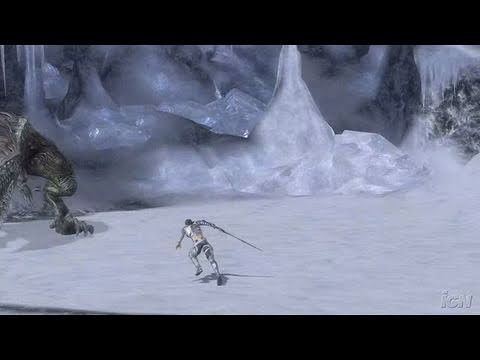
Lost Odyssey was an Xbox 360 exclusive released in Japan in 2007 and the west a year later, a couple of years into the console's life. While Microsoft's console (following the original Xbox) had plenty of support from western studios, it floundered in Japan. It needed a Japanese RPG.
Hironobu Sakaguchi, meanwhile, had recently left Square Enix after his work conceiving and managing the Final Fantasy series since the late '80s. After his debut film project Final Fantasy: The Spirits Within flopped, he resigned and later founded his own studio in 2004 - Mistwalker. The studio's first two games were the anime-style Dragon Quest-leaning Blue Dragon, and the more realistic Lost Odyssey following in the footsteps of Final Fantasy, both of which were released exclusively on Xbox 360. They even had scores composed by Final Fantasy's Nobuo Uematsu, further legitimising both projects
Sakaguchi was courted by Microsoft (following a reported fall out with Sony boss Ken Kutaragi), leading to the Xbox 360 having its own games to rival those of Square Enix on PlayStation. Yet while the 360 proved popular globally and Lost Odyssey was received well, a sequel was never made and it remains something of a cult classic played by a core group of JRPG fans.
One of those was Guillaume Broche, who would later become creative director for Expedition 33 at Sandfall Interactive.
"For me, Lost Odyssey was the last grand turn-based RPG adventure with realistic graphics," he tells me, reminiscing about the game. "Its themes were very heavy and very well handled - it's the last game that made me cry."
_tubrssc2d37.jpg?width=2048&height=2048&fit=bounds&quality=85&format=jpg&auto=webp)
When I first met Broche for a preview of Expedition 33, he cited a number of games as key inspiration: from the likes of Final Fantasy 8 and the Persona games, to Sekiro: Shadows Die Twice and - of course - Lost Odyssey.
The action-focused turn-based combat of Expedition 33 (requiring accurate button timing to perform actions) stems back to Lost Odyssey, as well as games like Nintendo's Super Mario RPG and Sony's The Legend of Dragoon. In Lost Odyssey, characters equip rings that not only buff attacks, but are visualised during combat and require players to release the trigger with exact timing for extra attack power.
Moreover, Lost Odyssey (like Expedition 33) features a somewhat abstract narrative and mature, thought-provoking themes. Protagonist Kaim has lost his memory (as so many RPG protagonists do) and must piece together his past across the course of the adventure. These memories - or dreams - take the form of poignant stories written by award-winning Japanese novelist Kiyoshi Shigematsu that take on an almost lyrical form, philosophising on the beauty of life and death across multiple short stories. This is Lost Odyssey at its best as Sakaguchi experimented with storytelling, even as the game's exploration and turn-based combat by comparison were seen at the time as old fashioned.
2d37.jpg?width=2048&height=2048&fit=bounds&quality=85&format=jpg&auto=webp)
_zgzg6fl2d37.jpg?width=2048&height=2048&fit=bounds&quality=85&format=jpg&auto=webp)
"It became a cult classic because few people played it, as it was available only on Xbox 360 while its core audience was probably more used to PlayStation consoles," says Broche.
"But that core audience who did play it loved it. The critical reception at the time was very unfair in my opinion, as the game was criticised for being 'old school' at a time where it felt like every game that was not an open world was viewed as 'old school' by the western press.
"I didn't share that opinion at all and its linear structure, coupled with a world map, an amazing story, and fantastic music, made it one of the best games of its kind."
When Expedition 33 was first revealed, it was praised for its fresh, modern take on Japanese-style RPGs. Yet with its combat and world map, it harkens back to the 'old school' design that was left behind after the release of Lost Odyssey. Even Eurogamer's own Lost Odyssey review at the time stated "there is little here to address the many failings of the form". Newer, powerful consoles can create expansive open worlds and execute impressive real-time combat. That, developers have assumed for the past couple of decades, is what players want.

Yet Expedition 33 proves a modern take on this style of game can be hugely successful, continuing the legacy of Lost Odyssey and the RPGs that came before it.
Broche laments that Lost Odyssey "never had any real successor". "Justice for Lost Odyssey," he says. "Remaster it now so more people can play it, please."
It's still playable now on modern Xbox consoles, though, via backwards compatibility - its combat remains just as tactical and its narrative just as emotive as before. If Expedition 33 has captured the attention of players today, it's about time Lost Odyssey gets its dues beyond its status as an Xbox 360 cult classic. Don't let its name become a reality.
The Xbox 360 turns 20 years old on 22nd November, so we've put together a week of coverage that looks back on Microsoft's most successful games console.