PUBG creator Brendan "PlayerUnknown" Greene is planning a new multiplayer FPS
He's talking about it having 100 vs. 100-player fights.


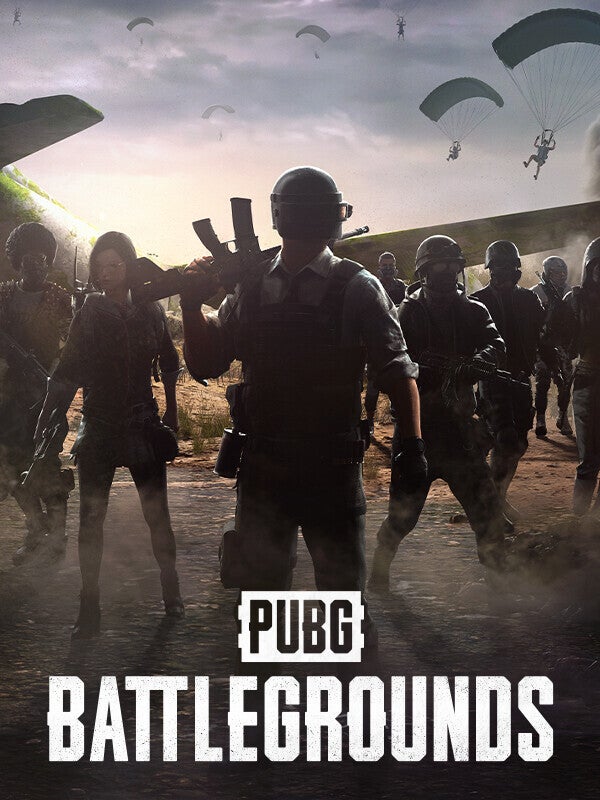
Brendan Greene, the game designer better known by the alias PlayerUnknown, who helped create the battle royale genre - first in an Arma mod, then in H1Z1, then in PlayerUnknown's Battlegrounds (PUBG) - is planning a new and large-scale multiplayer shooter. The current plan is for the game to support 100 versus 100-player battles.
The shooter is to be the second game in Greene's three-game masterplan, which is underway at his newish studio PlayerUnknown Productions, he told me in a video call. The first game in his plan, Prologue: Go Wayback, a wilderness survival and orienteering game, is already close to release - it arrives in early access later this month, on 20th November.

But to understand the idea for the shooter you have to loosely understand the overarching idea for the three games Greene wants to make. They are significantly different experiences designed to test different parts of an ambitious and potentially industry-shaking new piece of game-making technology. I'm talking about world-generation on a planetary scale. I'm not exaggerating when I say Greene's goals are as ambitious as remaking the internet - but more about that in a separate article.
Game One, Prologue: Go Wayback, was initially created as a way to implement and test terrain-level planetary generation. Every time you play, the game generates a new 8x8km forested game world for you to survive and explore in. Game Two, meanwhile, will be about testing different systems like shooting and multiplayer.
"Game Two aims to test limited multiplayer, maybe up to 100 versus 100 players," Greene told me. "It's more of an FPS/RTS mix. This is in my head what it is. And the aim is to test terrains at a bigger scale. Therefore we can test FPS mechanics, we can test interaction between NPCs, we can try testing these networking protocols at scale. So Game Two is that.
"And then Game Three," he added, "is where we really go to big-scale multiplayer. And then we can take all the stuff we've learned from the previous two games of generating terrain, enabling players to create their own planets, and having a network that works for whatever you want to use it for, be that an FPS game or whatever you want to create in these worlds."
Big plans, and again, I'll discuss the overarching idea more in a separate article. But how much of Game Two has actually been made or committed to paper? How much of it exists outside Brendan Greene's head? Because remember, Prologue: Go Wayback isn't even available in early access yet, and there's still a year's worth of promised open development to do there, I'm told.

What exists of Game Two? "So far, general high-level plans," Greene said. "I have an idea in my head for the game and we're talking about what it would require from a team - what kind of timeline we expect to do that in. Because this would be using our own engine and not Unreal [as Prologue uses], so it requires Melba [the studio's proprietary engine] to be in a state that artists and designers can work with."
Incidentally, there's a playable demonstration of this world-generating engine, Melba, available on Steam. Look for Preface: Undiscovered World there.
"But because it's going to be an FPS-type game," Greene continued, "that requires it to be in a very different state to how we released Go Wayback!, for example, which was very much in the early stages. So it requires time."
How much time? "We have a general idea of how long it will take to get to Game Two," he said, "and then with Game Two we expect another two, three, four years, maybe longer. We have a 10-year plan, more or less, of getting to Game Three."
You can already play Prologue: Go Wayback ahead of its early access release, incidentally, in an open - and free - beta playtest. That's where I've had a ramble around, and I found it a very powerful experience. The forested world is detailed and immersive, and the weather systems are terrifying. Rushing from cabin to cabin as a blizzard breaks and your temperature drops is a tense and thrilling thing. Even inside, you might not be safe, as wind rattles and breaks the windows, and dislodges wooden-planked walls. You'd better make sure there's a fire in the hearth and you've a full belly and you've salvaged all the warm clothes you can find.
PS4, Xbox One, PC

Video Game